 By
By Authors:
Muhan Zhang – The Chinese University of Hong Kong (CUHK) Business School
Forrest Briscoe – The Pennsylvania State University
Mark R. DesJardine – Dartmouth College
Interviewers:
Marton Gera – Rotterdam School of Management, Erasmus University
Saeed Fanoodi –School of Business Administration, University of Mississippi
Article link: https://doi.org/10.1177/00018392231199717
- One of your theoretical lenses and the literature you engage with focuses on community embeddedness. Were there any other theoretical frames you considered, and do you have any advice for researchers on finding a suitable theoretical avenue?
Actually, we initially centered on managerial attention as the explanatory mechanism for firms’ responsiveness to local protests. We hypothesized that proximity made local protests more salient to executives, who then paid more attention to those events. However, when we presented the paper to other researchers, their feedback challenged this assumption, on the basis that top business leaders are highly intelligent and well-informed, so they would already be aware of protests regardless of their geographic location. This feedback prompted us to rethink our theoretical foundation. During this reassessment phase, Forrest suggested looking at community embeddedness as an alternative theoretical framework. Instead of making assumptions about how much attention business leaders pay to their local community, we could argue that business leaders react to local protests because they provide additional information to inform their business decisions. We subsequently investigated this mechanism empirically with a series of moderators and alternative analyses.
- Would you advise junior researchers and PhD students to remain open to the possibility that their initial theoretical framework might require revision? Could you elaborate on strategies or best practices to facilitate this critical reassessment?
Definitely, yes. We believe that conducting research is also a process of testing explanations of phenomena. No reason should prevent us from revising our theory to achieve better explanations. For junior scholars and PhD students, seeking suggestions from other researchers at different stages of the paper could be very beneficial. For our paper, we found that presenting it to different groups of scholars on different occasions (e.g., conferences, departmental seminars) was especially helpful. We identified many common issues raised by different scholars, and their comments really helped us make significant improvements to the theory section of this paper. We also benefited a lot from friendly reviewers who were familiar with the topic.
- Your dependent variable and the organizational response you focused on is female director appointments. We are curious about the process of deciding to study this particular organizational change. Did you consider other potential changes that street protests could bring to organizations?
We did consider several. But unlike the explicit corporate support observed during the 2020 BLM movements, business leaders have historically been cautious in taking stances on contentious social issues. Female director appointments have the advantage by providing some strategic ambiguity and allowing organizations to signal their commitment to gender equity without explicitly referencing a particular movement, should they choose. Therefore, it seemed to fit well with our theory. That said, we are currently working on another study examining how street protests trigger different types of corporate responses.
- What was the reason for choosing the Women’s March as your empirical context for this work?
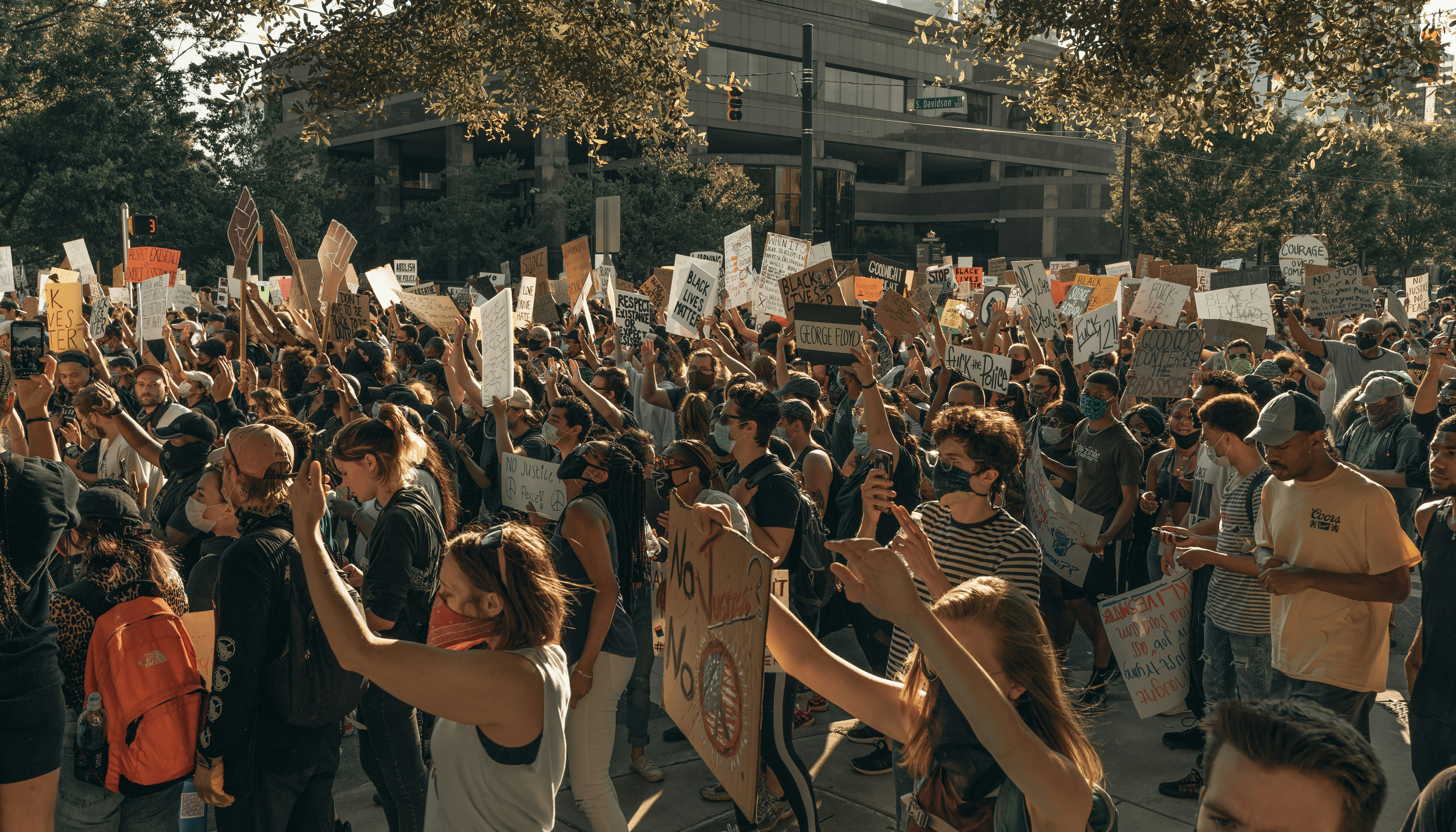
The frequency and scale of street protests have grown dramatically in recent years, with four of the five biggest U.S. protests happening in the last decade. So it is true that we have other options. We chose the Women’s March for three reasons: it’s one of the largest protests in U.S. history; its 2017 inception provided sufficient time to observe consequences when we began our project in 2020; and the gender equality issues it brought up were relevant across all industries, which allowed us to study firms across segments.
- How did the review process shape your paper? Did you conduct any analysis of the study based on the reviewers’ suggestions?
The review process really helped us improve our paper. It prompted us to enhance our analysis and refine our theoretical framework. Overall, the feedback we received focused more on theoretical development rather than substantial empirical changes. The reviewers provided constructive feedback that helped us clarify our theoretical contributions. For instance, they encouraged us to better distinguish our work on diffuse street protests that do not directly target businesses from existing research on information spillovers from activism to peer firms. This theoretical differentiation significantly improved our paper.
- Could you share any specific suggestions or recommendations for researchers regarding best practices or improvements in the peer review process, particularly based on your experience with this paper at ASQ?
First off, it’s important to read each reviewer’s comments quite a few times. After the first pass, it’s virtually impossible not to feel somewhat defensive, since we all invest such a huge amount of time and energy into each paper and it’s hard to hear criticism. But after some time and distance, you can return to the comments and see them with more of an open mind. We’ve also found it valuable to try to get inside the head of each reviewer. When possible, of course, we try to address the reviewer’s comments directly and completely – but even when that’s not possible (for example, because one reviewer’s comment conflicts with another reviewer’s comment), you can sometimes dig deeper to fathom the underlying concern that is motivating the reviewer’s comments, and find a way to engage with that instead.
- Since the publication of your paper, we have witnessed numerous new street protests related to various issues (e.g., the war in Gaza) around the world. Do you see value in conducting comparative studies across different countries or cultural contexts to examine if the indirect effects of street protests on corporate governance you documented vary globally?
Examining protest effects on corporate governance across contexts would be a great way to extend this work. We developed our theory about protest scale as an information signal within the American context, but different national contexts and factors—including the strength of civil society, social movement traditions, and cultural differences—could also shape how firms interpret and respond to community protests. Recent global movements, from France’s Yellow Vest protests to Indian farmers’ demonstrations, offer rich comparative settings.
- What key research avenues do you hope other scholars will follow based on your work?
Our study opens several promising research directions, one of which we just pointed out in response to the preceding question.
First, scholars might investigate how varied protest characteristics influence organizational responses. For example, it would be interesting to see how movements and counter-movements with opposing information jointly shape firm actions. Second, researchers could examine how firm characteristics, or corporate opportunity structures, shape firm responses to community protests. For instance, specialized roles like Community Engagement Officers likely alter how protest information is processed within corporate hierarchies. Additionally, a firm’s direct history with community activists may heighten reactivity to subsequent protest events. Organizations previously targeted may have different perceptions when assessing protest risks, making them more responsive to local sentiments.
- Muhan, this work was part of your PhD dissertation research. How did you decide on this topic, and how is this article related to other papers in your pipeline?
This paper originated from my second-year project, separate from my dissertation work. The idea for this paper emerged during the murder of George Floyd and the subsequent Black Lives Matter protests in 2020. I was particularly struck by how large corporations responded to these events through public statements supporting the movement and commitments to enhance organizational diversity. This phenomenon raised an interesting research question: Why do firms react to these national movements that don’t directly target business per se? Forrest and Mark provided invaluable mentorship as we developed this research program. We have two projects examining corporate responses to street protests. This paper represents the first of these two projects. Beyond these, I’m working on a few projects investigating other research questions related to social movements, especially their influence on organizational and individual outcomes.
Interviewer bios:
Marton Gera is a PhD candidate at the Rotterdam School of Management, Erasmus University, supervised by Pursey Heugens and Richard Haans. His research explores how organizations and social movements navigate and react to the rise of illiberalism.
Saeed Fanoodi is a PhD candidate at the University of Mississippi. He is interested in crowdfunding, Natural language processing (NLP) applications in research methods, and Artificial Intelligence (AI) governance.