A running collection of resources for ASQ's evidence presentation initiative, including AOM workshop slides from editors and authors on visualizing data, numerical narrative, ...
Tag: Quantitative methods
ASQ Interview
Bermiss & Greenbaum (2015). Loyal to Whom? The Effect of Relational Embededdness and Managers’ Mobility on Market Tie Dissolution
When a trusted manager defects to a rival firm, which relationship do clients keep? Sekou Bermiss and Bruce Greenbaum studied lobbyists to learn ...
ASQ Interview
Sasovova, Mehra, Borgatti & Schippers (2010). Network Churn: The Effects of Self-Monitoring Personality on Brokerage Dynamics
Why study friendship networks rather than advice ties? Zuzana Sasovova, Ajay Mehra, Stephen Borgatti, and Michaela Schippers defend that choice and describe how ...
ASQ Interview
Cobb & Stevens (2017). These Unequal States: Corporate Organization and Income Inequality in the United States
Adam Cobb and Flannery Stevens argue that where large firms employ fewer people, state income inequality rises. The idea traces back to Jerry ...
ASQ Interview
Dutta (2017): Creating in the Crucibles of Nature’s Fury–Associational Diversity and Local Social Entrepreneurship after Natural Disasters in California, 1991–2010
Why do some communities answer natural disasters with a burst of social entrepreneurship? Sunasir Dutta points to the variety of local voluntary associations, ...
ASQ Interview
Yue, Luo & Ingram (2013). The Failure of Private Regulation: Elite Control and Market Crises in the Manhattan Banking Industry
Writing from Columbia during the 2008 crisis, Lori Yue, Jiao Luo, and Paul Ingram looked back to 1907, when Manhattan's banking elite let ...
ASQ Interview
Bidwell (2011). Paying More to Get Less: The Effects of External Hiring Versus Internal Mobility
Reading statistics on the cost of replacing workers, Matthew Bidwell kept wondering how anyone actually knew. The answer became a paper showing that ...
Does guanxi fade as markets mature? Heather Haveman, Nan Jia, Jing Shi, and Yongxiang Wang found the opposite in China, where state power ...
ASQ Interview
Chen & Nadkarni (2017): It’s about Time! CEOs’ Temporal Dispositions, Temporal Leadership, and Corporate Entrepreneurship
Strategy research long treated time as an external constraint imposed on executives. Jianhong Chen and Sucheta Nadkarni explain why they went looking inside ...
ASQ Podcast
Gupta & Wowak (2017). The Elephant (or Donkey) in the Boardroom: How Board Political Ideology Affects CEO Pay.
Abhinav Gupta and Adam Wowak join the podcast to discuss how directors' political ideologies shape CEO pay, and how Federal Election Commission records ...
ASQ Interview
Leahey, Beckman, & Stanko (2016). Prominent but Less Productive: The Impact of Interdisciplinarity on Scientists’ Research
Interdisciplinary research wins citations but costs productivity. Erin Leahey, Christine Beckman, and Taryn Stanko discuss that trade-off, why their sample couldn't answer the ...
ASQ Podcast
McDonnell & Werner Dec (2016). Blacklisted Businesses: Social Activists’ Challenges and the Disruption of Corporate Political Activity
A Politico article about corporate PACs with bad PR sat on Timothy Werner's back burner until Mary-Hunter McDonnell visited his campus. They discuss ...
ASQ Interview
Pontikes & Barnett (2016). The Non-Consensus Entrepreneur: Organizational Responses to Vital Events
Why do software startups herd into hot market categories, and what happens to the companies that follow the crowd? Elizabeth Pontikes and William ...
ASQ Interview
Ingram & Torfason (2010). Organizing in the In-between: The Population Dynamics of Network-Weaving Organizations in the Global Intense Network
Paul Ingram and Magnus Thor Torfason study the organizations built to connect countries. They discuss why intergovernmental organizations deliver economic and political benefits ...
ASQ Interview
Kacperczyk, Beckman, & Moliterno (2015). Disentangling Risk and Change: Internal and External Social Comparison in the Mutual Fund Industry.
Behavioral theory and prospect theory both predict what firms do when performance dips, but tend to conflate risk with change. Aleksandra Kacperczyk, Christine ...
ASQ Interview
Merluzzi & Phillips (2016). The Specialist Discount: Negative Returns for MBAs with Focused Profiles in Investment Banking.
Conventional wisdom says specialists are rewarded. Jennifer Merluzzi and Damon Phillips found the opposite among MBAs entering investment banking, where the most focused ...
ASQ Interview
Rider (2009). Constraints on the Control Benefits of Brokerage: A Study of Placement Agents in U.S. Venture Capital Fundraising
Brokerage research celebrates the returns to spanning structural holes while ignoring what brokers spend to earn them. Christopher Rider makes the case for ...
ASQ Interview
Rider (2012). How Employees’ Prior Affiliations Constrain Organizational Network Change: A Study of U.S. Venture Capital and Private Equity
Network scholars study how ties form, rarely how they end. Christopher Rider considers whether interorganizational relationships belong to organizations or to the people ...
ASQ Interview
Guillén & Capron (2015). State Capacity, Minority Shareholder Protections, and Stock Market Development
It took three years and dozens of legally trained research assistants for Mauro Guillén and Laurence Capron to build their cross-national index of ...
ASQ Interview
Yenkey (2015). Mobilizing a Market: Ethnic Segmentation and Investor Recruitment into the Nairobi Securities Exchange
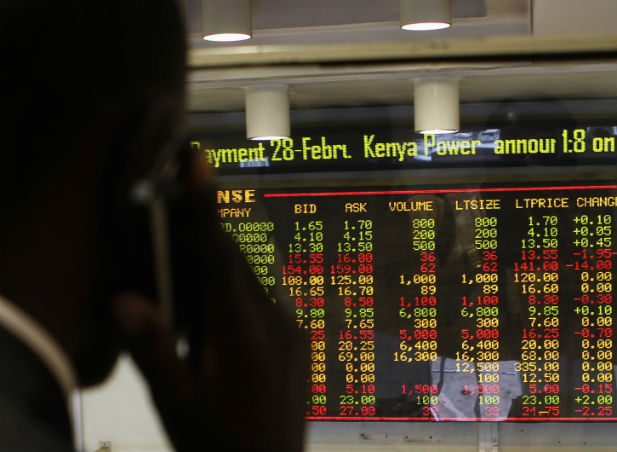
Christopher Yenkey went to East Africa to study how new stock markets recruit investors, settling on Kenya after a too-quiet month at the ...
ASQ Interview
Askin & Bothner (2016). Status-Aspirational Pricing: The ‘‘Chivas Regal’’ Strategy in U.S. Higher Education, 2006–2012
When universities slip in the rankings, some respond by raising tuition. Noah Askin and Matthew Bothner discuss the 'Chivas Regal' strategy and why ...
ASQ Interview
Park & Westphal (2013).Social Discrimination in the Corporate Elite: How Status Affects the Propensity for Minority CEOs to Receive Blame for Low Firm Performance
Sun Hyun Park and James Westphal found white male executives steering blame toward minority CEOs in the press. The bigger surprise: female and ...
ASQ Interview
Fragale, Sumanth, Tiedens & Northcraft (2012). Appeasing Equals: Lateral Deference in Organizational Communication
Alison Fragale, John Sumanth, Larissa Tiedens, and Gregory Northcraft used emails made public by the Enron investigation to study deference among peers, after ...
ASQ Interview
Huang and Pearce (2015). Managing the Unknowable: The Effectiveness of Early-stage Investor Gut Feel in Entrepreneurial Investment Decisions
How do angel investors decide when outcomes are unknowable? Laura Huang and Jone Pearce recount building a mixed-methods paper around gut feel, the ...
ASQ Interview
Briscoe & Tsai (2011). Overcoming Relational Inertia: How Organizational Members Respond to Acquisition Events in a Law Firm
Forrest Briscoe and Wenpin Tsai set out to use a law firm merger as a natural experiment on networks. Their diagrams ended up ...
ASQ Interview
Tilcsik, Anteby, and Knight (2015).Concealable Stigma and Occupational Segregation: Toward a Theory of Gay and Lesbian Occupations
Why are gay men overrepresented in some occupations and lesbians in others? András Tilcsik, Michel Anteby, and Carly Knight argue the answer is ...
ASQ Interview
Chatterjee and Hambrick (2011).Executive Personality, Capability Cues, and Risk Taking: How Narcissistic CEOs React to Their Successes and Stumbles
Arijit Chatterjee and Donald Hambrick started noticing how much self-regard some CEOs displayed in press interviews. That variance became a research program on ...
ASQ Interview
Dunn & Jones (2010). Institutional Logics and Institutional Pluralism: The Contestation of Care and Science Logics in Medical Education, 1967-2005
Mary Dunn and Candace Jones noticed that the rise of a care logic in medical education tracked the arrival of women in medical ...
ASQ Interview
Ou, Tsui, Kinicki, Waldman, Xiao, & Song (2014). Humble Chief Executive Officers’ Connections to Top Management Team Integration and Middle Managers’ Responses
Amy Ou, Anne Tsui, and colleagues were the first to test the effects of humble CEOs. Why now? The 2008 financial crisis, Ou ...
ASQ Interview
Westphal, Park, McDonald, & Hayward (2012). Helping Other CEOs Avoid Bad Press: Social Exchange and Impression Management Support among CEOs in Communications with Journalists
When bad earnings news hits, a CEO's best defense may be another CEO's praise. James Westphal, Sun Hyun Park, Michael McDonald, and Mathew ...
ASQ Interview
Pahnke, Katila, & Eisenhardt (2015). Who Takes You to the Dance? How Partners’ Institutional Logics Influence Innovation in Young Firms
Emily Cox Pahnke, Riitta Katila, and Kathleen Eisenhardt describe turning a dissertation into a study of how funding partners' institutional logics shape young ...
ASQ Interview
Xu, Lu, & Gu (2014). Organizational Forms and Multi-population Dynamics: Economic Transition in China
Dean Xu had long dreamed of explaining China's economic transition through organization theory. With Jane Lu and Qian Gu, he traces how a ...
ASQ Interview
Kim & Jensen (2011). How product order affects market identity repertoire ordering in the US opera market
Can an opera company change how audiences see it just by reordering its season? Bo Kyung Kim and Michael Jensen on market identity ...
ASQ Interview
Malter (2014). On the Causality and Cause of Returns to Organizational Status: Evidence from the Grands Crus Classés of the Médoc
A friend's bottle of good red wine eventually led Daniel Malter to the Grands Crus Classés of the Médoc, a setting fixed enough ...
ASQ Interview
Haveman, Habinek, & Goodman (2012). How Entrepreneurship Evolves: The Founders of New Magazines in America, 1741–1860
Heather Haveman planned to study careers in the American magazine industry, until the data made that impossible. She, Jacob Habinek, and Leo Goodman ...
ASQ Interview
Pollock, Lee, Jin, & Lashley (2015). (Un)tangled: Exploring the Asymmetric Coevolution of New Venture Capital Firms’ Reputation and Status
Timothy Pollock got tired of scholars using status and reputation interchangeably, often with identical measures. He and coauthors Peggy Lee, Kyuho Jin, and ...
ASQ Interview
Gerstner, König, Enders, & Hambrick (2013). CEO Narcissism, Audience Engagement, and Organizational Adoption of Technological Discontinuities
Measuring CEO narcissism meant ordering decades-old microfiche from the Chicago Public Library. Wolf-Christian Gerstner, Andreas König, Albrecht Enders, and Donald Hambrick on narcissistic ...
ASQ Interview
Dahlander & McFarland (2013). Ties That Last: Tie Formation and Persistence in Research Collaborations over Time
Why do some research collaborations last while others fizzle? Linus Dahlander and Daniel McFarland on ties that persist among academic co-authors, and why ...
ASQ Interview
Joshi (2014). By Whom and When Is Women’s Expertise Recognized? The Interactive Effects of Gender and Education in Science and Engineering Teams
Aparna Joshi never set out to be a gender researcher. Then a finding about women's expertise going unrecognized in science and engineering teams ...
ASQ Interview
Rogan & Sorenson (2014). Picking a (Poor) Partner: A Relational Perspective on Acquisitions
Michelle Rogan and Olav Sorenson on why acquirers pick poor partners: shared clients shape who buys whom in global advertising, and the same ...
ASQ Interview
Ferguson & Hasan (2013). Specialization and Career Dynamics: Evidence from the Indian Administrative Service
John-Paul Ferguson and Sharique Hasan expected specialization to pay early in Indian Administrative Service careers and diversification to pay later. Specialization won at ...
ASQ Interview
Graffin, Bundy, Porac, Wade, & Quinn (2013). Falls from Grace and the Hazards of High Status: The 2009 British MP Expense Scandal and Its Impact on Parliamentary Elites
Do elites fall from grace because they misbehave, or because they're targeted? Scott Graffin, Jonathan Bundy, Joseph Porac, James Wade, and Dennis Quinn ...
ASQ Interview
Kleinbaum (2012). Organizational Misfits and the Origins of Brokerage in Intrafirm Networks
An English literature PhD running global financial services sales caught Adam Kleinbaum's attention, and his wife's question, 'How did he end up in ...
ASQ Interview
Yue, Rao, & Ingram (2013). Information Spillovers from Protests against Corporations: A Tale of Walmart and Target
Why did protesters swarm Walmart but mostly spare Target? Lori Yue, Hayagreeva Rao, and Paul Ingram describe the mapping exercise that revealed Target ...
ASQ Interview
Ody-Brasier & Vermeulen (2014). The Price You Pay: Price-setting as a Response to Norm Violations in the Market for Champagne Grapes
Champagne grape growers all claimed prices were uniform, then admitted charging less to buyers they liked. Amandine Ody-Brasier and Freek Vermeulen recount how ...
ASQ Interview
Zhu, Shen, & Hillman (2014). Recategorization into the In-group: The Appointment of Demographically Different New Directors and Their Subsequent Positions on Corporate Boards
If directors prefer people like themselves, why has board diversity risen for two decades? David Zhu, Wei Shen, and Amy Hillman explain how ...
ASQ Interview
Tilcsik (2014). Imprint–environment Fit and Performance: How Organizational Munificence at the Time of Hire Affects Subsequent Job Performance
András Tilcsik went into his dissertation site planning to study culture and networks, but the data he needed didn't exist. He recounts how ...
ASQ Interview
Wang (2015). Activating Cross-border Brokerage: Interorganizational Knowledge Transfer through Skilled Return Migration
Dan Wang surveyed thousands of skilled migrants who returned home, then interviewed 160 of them. Those conversations changed how he measured embeddedness and ...
ASQ Interview
Christian, Eisenkraft, & Kapadia (2015). Dynamic Associations among Somatic Complaints, Human Energy, and Discretionary Behaviors Experiences with Pain Fluctuations at Work
People with chronic pain have good days and bad days, but theories of working sick treated health as fixed. Michael Christian, Noah Eisenkraft, ...
ASQ Interview
Briscoe & Murphy (2012). Sleight of Hand? Practice Opacity, Third-party Responses, and the Interorganizational Diffusion of Controversial Practices
Why did transparent benefit cuts stall while opaque spending caps spread through the Fortune 500? Forrest Briscoe and Chad Murphy explain how consultants' ...