Our five most-read posts of 2015, led by Pahnke, Katila, and Eisenhardt on partners' institutional logics and a behind-the-scenes conversation with ASQ managing ...
ASQ Interview
Chatterjee and Hambrick (2011).Executive Personality, Capability Cues, and Risk Taking: How Narcissistic CEOs React to Their Successes and Stumbles
Arijit Chatterjee and Donald Hambrick started noticing how much self-regard some CEOs displayed in press interviews. That variance became a research program on ...
ASQ Interview
Desai, Chugh, & Brief (2014).The Implications of Marriage Structure for Men’s Workplace Attitudes, Beliefs, and Behaviors toward Women
Sreedhari Desai, Dolly Chugh, and Arthur Brief find that men's marriage structures follow them to work. One surprise: being raised by a working ...
ASQ Interview
Zietsma & Lawrence (2010). Institutional Work in the Transformation of an Organizational Field: The Interplay of Boundary Work and Practice Work
The path was anything but linear: Charlene Zietsma and Thomas Lawrence recount how two conference papers merged, got bounced from an AMJ special ...
ASQ Interview
Dunn & Jones (2010). Institutional Logics and Institutional Pluralism: The Contestation of Care and Science Logics in Medical Education, 1967-2005
Mary Dunn and Candace Jones noticed that the rise of a care logic in medical education tracked the arrival of women in medical ...
ASQ Interview
Ou, Tsui, Kinicki, Waldman, Xiao, & Song (2014). Humble Chief Executive Officers’ Connections to Top Management Team Integration and Middle Managers’ Responses
Amy Ou, Anne Tsui, and colleagues were the first to test the effects of humble CEOs. Why now? The 2008 financial crisis, Ou ...
ASQ Interview
Westphal, Park, McDonald, & Hayward (2012). Helping Other CEOs Avoid Bad Press: Social Exchange and Impression Management Support among CEOs in Communications with Journalists
When bad earnings news hits, a CEO's best defense may be another CEO's praise. James Westphal, Sun Hyun Park, Michael McDonald, and Mathew ...
ASQ Interview
Pahnke, Katila, & Eisenhardt (2015). Who Takes You to the Dance? How Partners’ Institutional Logics Influence Innovation in Young Firms
Emily Cox Pahnke, Riitta Katila, and Kathleen Eisenhardt describe turning a dissertation into a study of how funding partners' institutional logics shape young ...
ASQ Interview
Xu, Lu, & Gu (2014). Organizational Forms and Multi-population Dynamics: Economic Transition in China
Dean Xu had long dreamed of explaining China's economic transition through organization theory. With Jane Lu and Qian Gu, he traces how a ...
ASQ Interview
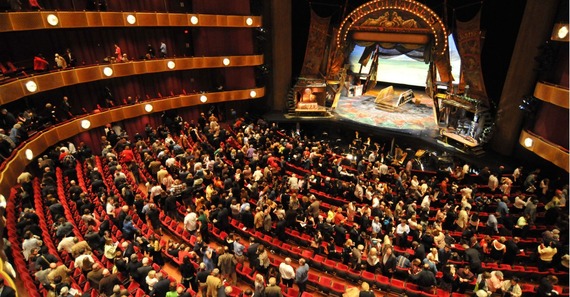
Kim & Jensen (2011). How product order affects market identity repertoire ordering in the US opera market
Can an opera company change how audiences see it just by reordering its season? Bo Kyung Kim and Michael Jensen on market identity ...
ASQ Interview
Quattrone (2015). Governing Social Orders, Unfolding Rationality, and Jesuit Accounting Practices: A Procedural Approach to Institutional Logics
What did Jesuit bookkeeping know that modern corporations forget? Paolo Quattrone argues that accounting works best when it interrogates what cannot be framed: ...
ASQ Interview
Clark, Gioia, Ketchen, and Thomas (2010) Transitional Identity as a Facilitator of Organizational Identity Change during a Merger
Shawn Clark, Dennis Gioia, David Ketchen, and James Thomas discuss transitional identity, the interim sense of what merging organizations are becoming, and why ...
The blog turns two: 45 interviews published and readers in nearly 50 countries since August 2013. A thank-you to contributors, a call for ...
ASQ Interview
Malter (2014). On the Causality and Cause of Returns to Organizational Status: Evidence from the Grands Crus Classés of the Médoc
A friend's bottle of good red wine eventually led Daniel Malter to the Grands Crus Classés of the Médoc, a setting fixed enough ...
ASQ Interview
Haveman, Habinek, & Goodman (2012). How Entrepreneurship Evolves: The Founders of New Magazines in America, 1741–1860
Heather Haveman planned to study careers in the American magazine industry, until the data made that impossible. She, Jacob Habinek, and Leo Goodman ...
ASQ Interview
Pollock, Lee, Jin, & Lashley (2015). (Un)tangled: Exploring the Asymmetric Coevolution of New Venture Capital Firms’ Reputation and Status
Timothy Pollock got tired of scholars using status and reputation interchangeably, often with identical measures. He and coauthors Peggy Lee, Kyuho Jin, and ...
ASQ Interview
Gerstner, König, Enders, & Hambrick (2013). CEO Narcissism, Audience Engagement, and Organizational Adoption of Technological Discontinuities
Measuring CEO narcissism meant ordering decades-old microfiche from the Chicago Public Library. Wolf-Christian Gerstner, Andreas König, Albrecht Enders, and Donald Hambrick on narcissistic ...
ASQ Interview
Tan (2015). Using Negotiated Joining to Construct and Fill Open-ended Roles in Elite Culinary Groups
Vaughn Tan had been hanging around cutting-edge culinary R&D teams since 2003 before realizing they were a research site. People there contribute enormously ...
ASQ Interview
Brescoll (2011). Who Takes the Floor and Why: Gender, Power, and Volubility in Organizations
As a Senate aide, Victoria Brescoll noticed that the most powerful women rarely took the floor while their male counterparts seized every chance. ...
ASQ Interview
Perkins (2014). When Does Prior Experience Pay? Institutional Experience and the Multinational Corporation
Susan Perkins presented this paper at conferences nearly a decade before it appeared in print. She recounts that long road, plus the advice ...
ASQ Interview
Dahlander & McFarland (2013). Ties That Last: Tie Formation and Persistence in Research Collaborations over Time
Why do some research collaborations last while others fizzle? Linus Dahlander and Daniel McFarland on ties that persist among academic co-authors, and why ...
ASQ Interview
Harvey & Kou (2013). Collective Engagement in Creative Tasks: The Role of Evaluation in the Creative Process in Groups
Sarah Harvey and Chia-Yu Kou had a hunch from consulting life: groups are most creative when meetings flow, not when perspectives clash. Testing ...
Linda Johanson is usually the first person to read your ASQ submission. The journal's managing editor describes how manuscripts get matched to editors ...
ASQ Interview
Joshi (2014). By Whom and When Is Women’s Expertise Recognized? The Interactive Effects of Gender and Education in Science and Engineering Teams
Aparna Joshi never set out to be a gender researcher. Then a finding about women's expertise going unrecognized in science and engineering teams ...
ASQ Interview
Ashforth & Reingen (2014). Functions of Dysfunction: Managing the Dynamics of an Organizational Duality in a Natural Food Cooperative
What began as a marketing study of a natural food co-op turned into something else once idealists and pragmatists started fighting. Blake Ashforth ...
ASQ Interview
Rogan & Sorenson (2014). Picking a (Poor) Partner: A Relational Perspective on Acquisitions
Michelle Rogan and Olav Sorenson on why acquirers pick poor partners: shared clients shape who buys whom in global advertising, and the same ...
ASQ Interview
Zhu & Chung (2014). Portfolios of Political Ties and Business Group Strategy in Emerging Economies: Evidence from Taiwan
Hongjin Zhu and Chi-Nien Chung studied what Taiwan's business groups did when the 2000 regime change scrambled political loyalties, and why holding a ...
ASQ Interview
Ferguson & Hasan (2013). Specialization and Career Dynamics: Evidence from the Indian Administrative Service
John-Paul Ferguson and Sharique Hasan expected specialization to pay early in Indian Administrative Service careers and diversification to pay later. Specialization won at ...
ASQ Interview
Graffin, Bundy, Porac, Wade, & Quinn (2013). Falls from Grace and the Hazards of High Status: The 2009 British MP Expense Scandal and Its Impact on Parliamentary Elites
Do elites fall from grace because they misbehave, or because they're targeted? Scott Graffin, Jonathan Bundy, Joseph Porac, James Wade, and Dennis Quinn ...
ASQ Interview
Kacperczyk (2013). Opportunity Structures in Established Firms: Entrepreneurship versus Intrapreneurship in Mutual Funds
Google and Amazon spend billions keeping employees entrepreneurial, yet research says large firms produce fewer founders. Aleksandra Kacperczyk describes reassessing that conventional wisdom ...
ASQ Interview
Barsade & O’Neill (2014). What’s Love Got to Do with It? A Longitudinal Study of the Culture of Companionate Love and Employee and Client Outcomes in a Long-term Care Setting
Sigal Barsade and Olivia O'Neill faced a framing dilemma: lead with emotional culture as the general construct, or with companionate love itself? They ...
ASQ Interview
Almandoz (2014). Founding Teams as Carriers of Competing Logics: When Institutional Forces Predict Banks’ Risk Exposure
Juan Almandoz came to academia after business and nonprofit careers, curious why the same work means such different things to different people. He ...
ASQ Interview
Kleinbaum (2012). Organizational Misfits and the Origins of Brokerage in Intrafirm Networks
An English literature PhD running global financial services sales caught Adam Kleinbaum's attention, and his wife's question, 'How did he end up in ...
ASQ Interview
Detert, Burris, Harrison, & Martin (2013). Voice Flows to and around Leaders: Understanding When Units Are Helped or Hurt by Employee Voice
Speaking up is supposed to help organizations. James Detert, Ethan Burris, David Harrison, and Sean Martin discuss their finding that voice flowing sideways ...
ASQ Interview
Yue, Rao, & Ingram (2013). Information Spillovers from Protests against Corporations: A Tale of Walmart and Target
Why did protesters swarm Walmart but mostly spare Target? Lori Yue, Hayagreeva Rao, and Paul Ingram describe the mapping exercise that revealed Target ...
ASQ Interview
Bianchi (2013). The Bright Side of Bad Times: The Affective Advantages of Entering the Workforce in a Recession
Emily Bianchi graduated into the dot-com crash, cobbled together part-time jobs, and was grateful for a badly paid one. She describes how that ...
ASQ Interview
Smith (2011). Identities as Lenses: How Organizational Identity Affects Audiences’ Evaluation of Organizational Performance
Edward Smith has compared organizations to fishing boats, exotic fruit, and matchmaking markets. He reflects on when a metaphor carries a theory to ...
ASQ Interview
Ody-Brasier & Vermeulen (2014). The Price You Pay: Price-setting as a Response to Norm Violations in the Market for Champagne Grapes
Champagne grape growers all claimed prices were uniform, then admitted charging less to buyers they liked. Amandine Ody-Brasier and Freek Vermeulen recount how ...